



Why Does One Jadeite Pendant Cost $100 and Another $10,000?
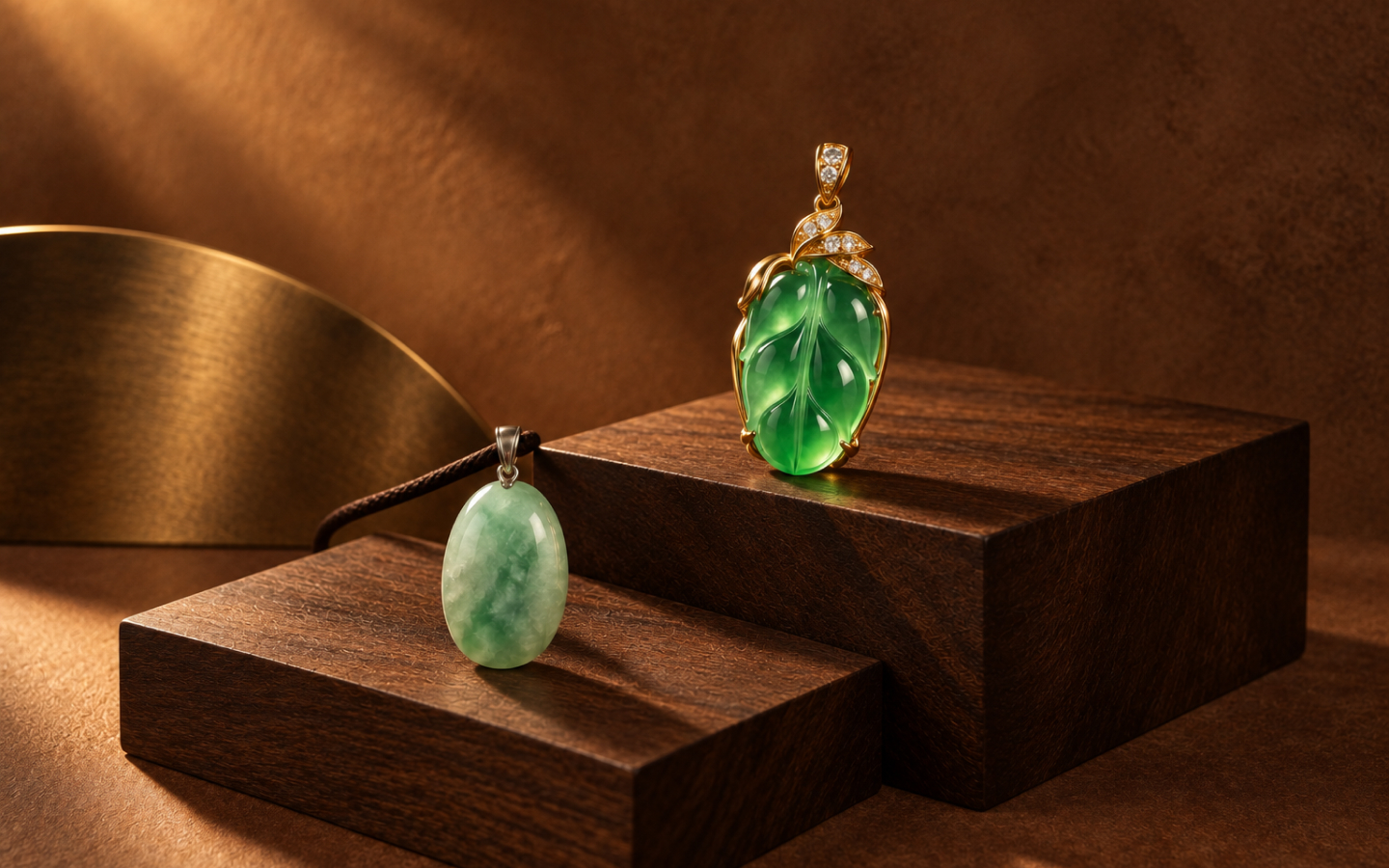
Place two jadeite pendants side by side, and the price difference can sometimes feel unreasonable. One might retail for around $100, while the other carries a price tag of $10,000 or more. Both are green, both are polished, and the product descriptions for both might simply read "natural jade".
So, what are you actually paying for?
Simply put, jadeite is never priced based on a single characteristic. While color is crucial, transparency, texture, size, fractures, treatments, carving, and jewelry settings matter just as much. When multiple rare and desirable qualities come together in a single piece, the price rises significantly. It is this specific combination of traits—rather than the word "jade" in a product title—that creates the vast price gap.
This is also why photos can easily mislead. A tiny, highly lit image can make commercial-grade jadeite appear vivid green, whereas a high-quality, fine-textured piece might look understated in a photograph before light hits its interior. Before comparing prices, compare the actual quality.
1. Ensure You Are Comparing Jadeite to Jadeite
"Jade" is not a precise product description. According to the Gemological Institute of America (GIA), "jade" is an overarching term encompassing both jadeite and nephrite. Historically, the word has also been misapplied to other gem materials and synthetic imitations. (GIA Jade Buyer's Guide, GIA Jade Description)
Consequently, a $100 "jade pendant" and a $10,000 jadeite pendant may not even be the same material. Lower-priced items might be nephrite, treated jadeite, aventurine, serpentine, or complete imitations. While these materials are not inherently bad, they must be correctly labeled and sold under their true identity.
Before comparing two pieces, verify the basics:
• Is the material genuine jadeite?
• Is it natural or synthetic?
• Are there any detected treatments?
• Do the laboratory report, dimensions, and photos match the physical pendant?
Once these baseline facts are established, you can evaluate quality and value.
2. Color Catches the Eye, but "Green" Isn't Enough
Color is usually the first detail people notice, and GIA notes that it remains the single most important factor influencing jadeite's value. However, evaluating color goes far beyond binary distinctions of "green" versus "not green". Buyers evaluate hue, saturation, tone, and color distribution. A vibrant, balanced green that stays lively across different light sources is entirely different from a greyish green, color that rests only on the surface, or an image enhanced by digital editing. (GIA Jade Quality Factor)
Jadeite also occurs in lavender, white, yellow, red, blue, and black. A pale color does not become expensive simply because it carries a trendy market name. Conversely, a lavender or colorless jadeite piece with exceptional transparency and texture can be remarkably valuable and attractive.
When shopping online, treat indoor studio photos strictly as an indoor reference. Never assume the piece will look identical under direct sunlight. Even when video is filmed under indoor lighting, a slow 360-degree rotation helps you evaluate the surface, form, and color distribution.
3. Transparency Transforms How Color Is Perceived
Two pendants can share a similar shade of green yet feel entirely different in hand. One might only reflect light from its surface, while the other allows light to penetrate deep into the stone, giving the color visual depth and a soft, inner glow.
GIA describes semi-transparency as the paramount state for top-tier jadeite, ranking color, transparency, and texture as the three core quality factors. Excellent transparency can sometimes compensate for uneven color distribution, whereas opaque or cloudy patches pull down a piece's overall appeal. (GIA Jade Quality Factor)
Thickness plays an essential role here. Thinner jadeite slices allow light to pass through more easily than thicker cuts of similar material, but thinner does not automatically mean better. Always check the actual millimeter thickness and ensure pieces are displayed against the same background when comparing transparency.
4. Fine Texture: The Quiet Difference Photos Miss
Jadeite's texture stems from the microscopic interlocking crystals forming its internal structure. Jadeite composed of fine crystals takes a smoother, mirror-like polish. Coarse-grained material—even with decent color—can look dry, rough, or uneven.
This explains why two pendants of similar color can sit in entirely different price brackets. Standard front-facing product photos rarely reveal fine texture; high-definition close-up videos, side lighting, and macro photos offer far better clarity.
Exercise caution with trade terms like "old mine" or "icy," as different sellers use them inconsistently. Rather than relying on romantic names, ask the seller to describe the observable texture, transparency, color uniformity, and internal features.
5. Size Is Only Comparable When Other Qualities Match
Larger pendants require more raw material, but size alone does not equal high value. GIA points out that among jadeite cabochons, beads, and bangles, value increases with size provided all other quality factors remain equal.
That qualification is critical. A small pendant with vivid color, fine texture, and high transparency can easily command a higher price than a large carving plagued by dull color and structural fractures. (GIA Jade Buyer's Guide)
When comparing items, focus on exact measurements, thickness, and weight rather than relying on model photos or enlarged product shots. For carved pieces, evaluate how much of the item is solid jadeite versus openwork lattice.
6. Fractures, Inclusions, and Hidden Weak Points
As a natural gem, jadeite frequently contains internal features, color zoning, and mineral inclusions. The goal isn't finding a piece that looks as uniform as manufactured glass, but assessing whether these natural characteristics compromise the stone's beauty, durability, or both.
GIA notes that fractures significantly lower jadeite's value. An internal grain line that does not reach the surface is fundamentally different from an open fracture running through a delicate, load-bearing area of a carving. Dark mineral inclusions cleverly integrated into a carved leaf or animal pattern can become part of the artistic design; the same dark spot in the middle of a clean cabochon is a major distraction. (GIA Jade Quality Factor)
Always request views of the sides and back, and ask if any lines can be felt with a fingernail. Transparent disclosure doesn't strip natural jadeite of its charm—it makes pricing fair and understandable.
7. Treatments Improve Appearance, Not Value Foundations
A pendant can be real jadeite while having undergone chemical alterations. In standard trade terminology:
• Type A: Natural jadeite that has undergone no chemical processing (traditional surface waxing is accepted).
• Type B: Jadeite bleached in acid to remove iron stains and impregnated with polymer resin.
• Type C: Jadeite that has been artificially dyed.
GIA notes that jade material may be dyed, bleached, heated, waxed, or polymer-infused. (GIA Jade Buyer's Guide)
Treatments can make lower-grade material appear cleaner or more vibrant. This does not mean treated jadeite lacks decorative purpose, but it should never be priced or sold as untreated Type A natural jadeite.
When purchasing higher-value pieces, insist on a report from a recognized independent gemological laboratory. A lab report identifies the material and details any detectable treatments. Keep in mind that a report identifies the stone; it does not evaluate artistic carving quality, judge retail fairness, or guarantee future value appreciation. (GIA Colored Stone Reports & Services Details)
8. Carving Can Preserve Value—or Ruin a Rough
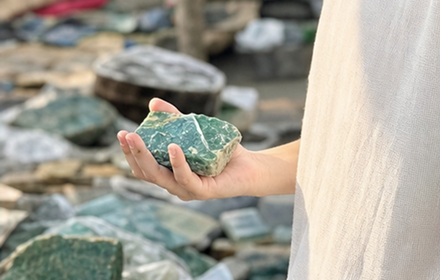
Great carving isn't about packing in maximum detail; it begins with reading the raw stone. A master carver positions the most vibrant color vein right at an animal's eye, lets a leaf follow a natural color transition, or carves around dangerous internal fractures without making the piece structural fragile.
Inferior carving often looks excessively busy to mask underlying flaws in the rough material. Soft edges, chaotic linework, and awkward proportions are warning signs. Fine carving holds up from the front, side, and back, respecting the stone's natural weight, thickness, and flow.
This artistic element is why jadeite cannot be priced by a rigid mathematical formula. Given two identical pieces of rough, one carver might waste the color, while another turns it into the centerpiece of a masterpiece.
9. The Setting Adds Cost, Not Stone Quality
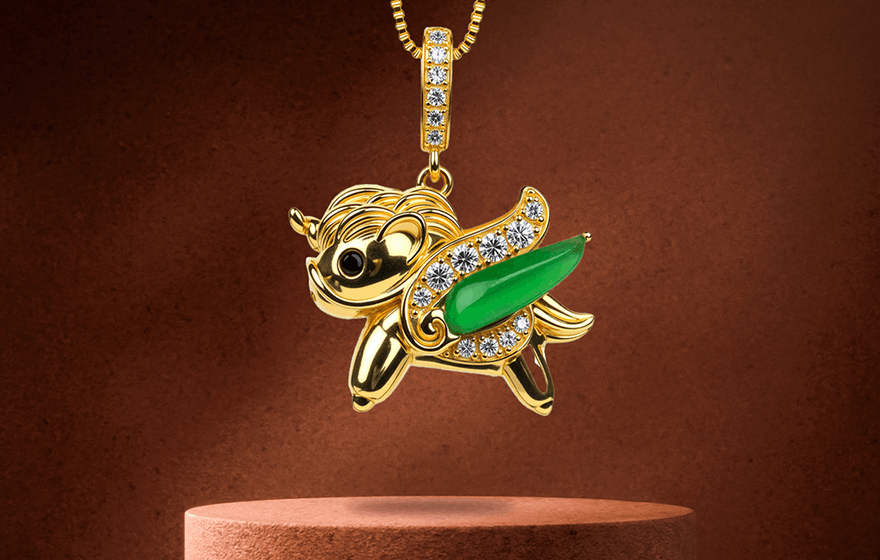
A simple cord, a 925 silver mounting, and a custom 18K gold setting carry vastly different material and labor costs. Accent diamonds, custom hinges, hand-finishing, and structural reinforcement add to the final retail price. A thoughtful setting also protects delicate edges for daily wear.
However, precious metal does not upgrade mediocre jadeite. A heavy 18K gold setting increases the manufacturing cost of the finished jewelry piece, but the stone itself must still be judged on its own color, transparency, texture, treatment status, and integrity.
When evaluating finished jewelry, split your assessment into three questions:
1. What is the value foundation of the jadeite stone itself?
2. What value do the design, metal, and craftsmanship add?
3. Does the final piece function cohesively as a fine piece of jewelry?
10. Why Final Pricing Is Never a Simple Formula
Jadeite has no standardized global price per gram. A lab certificate is not a price tag, and "Type A" is not a quality grade. "Type A" simply confirms the stone is untreated; it does not guarantee vivid color, fine texture, high transparency, or skilled carving.
Seller operations and service channels also influence retail prices. Professional photography, lab testing, custom design, flexible return policies, clear communication, and after-sales support all incur costs. Conversely, a high price tag on its own proves nothing. The real question is: Can the seller explain the price using observable quality and verifiable details?
Whether spending $100 or $10,000, request the same baseline details: accurate material identification, treatment disclosures, exact dimensions, weight, clear photos/videos of all angles, certificate details, and explicit return terms. Ask yourself: If I couldn't see the price tag, would I still love this piece?
Price should follow understanding, not replace it.
Explore Our Collection
Browse our collection of RUAAALI Jadeite Pendants and compare each design thoughtfully. If you need to confirm dimensions or details before making a decision, feel free to reach out to our team. Please note that our current online product images are captured under indoor lighting conditions.
Frequently Asked Questions
Q1: Is Type A jadeite always expensive?
A: No. "Type A" describes the treatment status, not overall quality. A Type A piece can still exhibit pale color, coarse texture, low transparency, visible fractures, or simple craftsmanship.
Q2: Does a certificate prove a jadeite pendant is worth its price?
A: No. A qualified laboratory report identifies the material and any detectable treatments, but it does not determine retail pricing, artistic design quality, or future resale value.
Q3: Is darker green jadeite more valuable?
A: Not automatically. Evaluation depends on hue, saturation, tone, color evenness, and how the color interacts with transparency and texture. Extremely dark material can appear almost black without light passing through it.
Q4: Why can a small jadeite pendant cost more than a large one?
A: The smaller piece may feature rarer color, superior transparency, finer texture, fewer structural fractures, or higher carving quality. Size increases value only when all other quality attributes are comparable.
Q5: Does an 18K gold setting make the jadeite stone more valuable?
A: It increases the material and labor cost of the finished jewelry piece, but it does not alter the underlying quality of the stone. Judge the gem and the setting separately before evaluating the total design.